
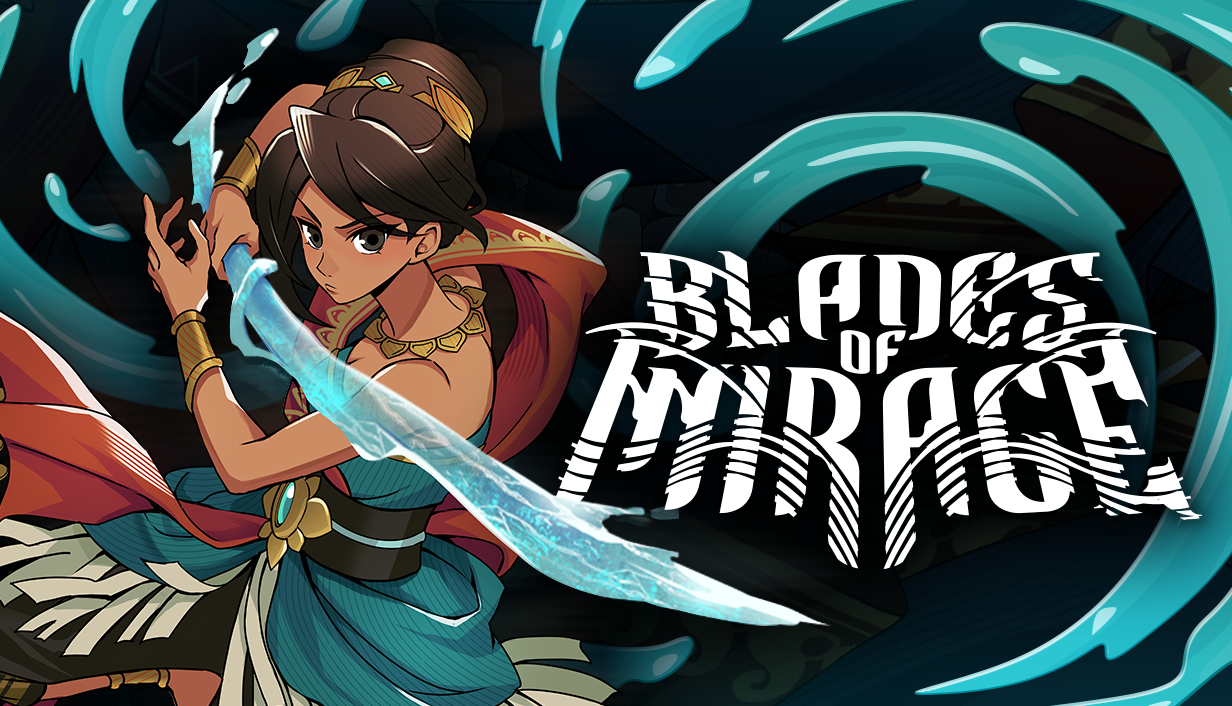
At Tokyo Game Show, The Gaming Districts spoke with Agate Growth Manager and Product Marketing Manager Andhika Widya Poetra about Blades of Mirage and how Southeast Asian culture, mythology, and landscapes are shaping the upcoming action-adventure game.
Indonesian developer Agate is bringing a distinctly Southeast Asian identity to its upcoming action-adventure game Blades of Mirage.
Currently in development, the game draws inspiration from across Southeast Asia, incorporating elements from Indonesia, the Philippines, Thailand, Malaysia, Brunei, and other parts of the region into its world, environments, story, and gameplay.
During Tokyo Game Show, The Gaming Districts spoke with Agate Growth Manager and Product Marketing Manager Andhika Widya Poetra about the game’s development, the cultural influences behind its world, its combat system, side content, and how Agate hopes to introduce Southeast Asian-inspired experiences to players around the world.
Agate’s Experience Behind Blades of Mirage
Is Blades of Mirage the first game that Agate has developed?
Andhika Widya Poetra: No, not that far. Our company was established in 2009, and we have worked on a lot of Flash games, mobile games, and also several premium games before this.
Blades of Mirage has actually been three years in the making. I think it’s been two to three years in development right now.
Why Southeast Asia?
One of the biggest selling points of Blades of Mirage is its Southeast Asian inspiration. Agate is from Indonesia, but why did you decide to focus on Southeast Asia?
Poetra: I think it’s because Southeast Asia has always been there. Bali has always been there. Boracay Island has always been there. The Philippines is always out there. But we’re seeing that, up until now, no one has really made one full package that presents Southeast Asia as a cohesive concept that people can enjoy. We have our temples, our rivers, and our biomes that are so rich and so good, but they haven’t really been displayed together in one cohesive product. That’s why we saw an opportunity there. Combined with the genre, the heroine’s story, and the narrative, we thought this whole idea of Southeast Asia could work.
Bringing Mythology and Gameplay Together
Did the stories and myths from across Southeast Asia come first, or did the game mechanics come first?
Poetra: It’s actually quite here and there. It’s like, which came first, the chicken or the egg? Southeast Asian mythology has always been on our minds. Since we were children, and because all of the developers are Indonesian, these things are part of our background. We’re thinking, “Hey, Bali has always been that way. The temples have always been that way.” The game mechanics have also been refined throughout the years. We’re trying to match the narrative with the visual design and also the mechanics that we want to use in the game. So actually, it’s hard to say which one came first. We just try our best to make everything work together. For example, the weapon is water-based. It’s not random, like, “Hey, let’s use water.” It’s because we’re rich in water. We have a lot of rivers and we have a lot of sea. That’s why we’re thinking, “Oh yeah, a water-based weapon could work with this narrative and concept.”
Southeast Asian Inspirations Across the Game World
The game takes place across islands. What particular Southeast Asian inspirations were used for those islands?
Poetra: It would be shallow if I just said Bali because we’re from Indonesia.It’s mainly from there, but we also draw inspiration from Thailand, the Philippines, Malaysia, Brunei, and several other places. It’s not only the temples. It’s the sea, the statues, the map, and also the biomes. There are rivers inspired by specific areas of Indonesia, as well as several customs that we take from the Philippines and Thailand. So it’s a bit here and there. We try to learn as much as we can. I know it would be overpromising to call it a perfect representation of Southeast Asia. We try to do it as best as we can. But we think it should start somewhere, and we’re trying to start it.
Balancing Cultural Representation and Gameplay
Southeast Asia is known for its maritime cultures, beaches, myths, and legends. Could Blades of Mirage eventually expand to include more marine-based cultures and mythology?
Poetra: We certainly hope to. If we talk to any game director and give them any ideas, if there’s a budget and the time, we’re going to expand as much as we can. That should be the mentality. But within the limitations and the release timeline, which is sometime next year, we’re thinking that we need to at least deliver the core experience first. That’s an action-adventure game with a little bit of Souls-like combat, and we want to focus on that as well. We don’t want to lag behind on the game mechanics just because we have a good visual concept. We want to have a good, solid experience first. Then let’s see if, after that, we can extend it in this direction.
Will the game’s main story be complete and playable from beginning to end when it releases?
Poetra: Yep.
Side Quests and Southeast Asian Humor
What other aspects of the game can players expect besides the main story?
Poetra: I think what’s funny, and what I can tell you, is that there are a lot of side quests. I wouldn’t say a lot, but I would say there are some funny side quests. Funny, at least to us. One thing that I’ve learned so much from Southeast Asian culture, talking with people from Malaysia, the Philippines, and Thailand, is that we like cats. We’re in every region, actually, but on our side, we have a lot of stray cats. We imported a lot of that cat concept into this kind of game. This is a serious game. It’s a Souls-like action-adventure. But we’re trying to have side quests that involve catching some cats that you can collect. If you’re familiar with several local memes from Indonesia, there’s a statue of a lion that was made so badly that it became a laughing stock, and we try to put that into the game. That’s what we’re trying to do. We’re trying to have a lot of fun inside the game. At least, our own version of fun.
Reaching Players Beyond Southeast Asia
For players from Southeast Asia, the game’s cultural connection is an obvious draw. But how do you think Blades of Mirage can appeal to gamers outside Southeast Asia?
Poetra: That is a really good question. We did our playtests several times back then, and we actually have our demo released already. The funny thing is, the first main region is obviously our home base, which is Southeast Asia, in terms of the player base. The second one is actually the US. The third one is actually China. So I think we’re in an age where it’s just a matter of delivering fun. The Southeast Asian elements are going to be another selling point and another source of knowledge for them. But at the end of the day, if it’s a good design for them, if the game mechanics are good, they’ll enjoy it. I believe in that.
Blades of Mirage Demo Now Available on Steam
For players interested in experiencing Blades of Mirage ahead of its full release, the game’s demo is now available on Steam.