
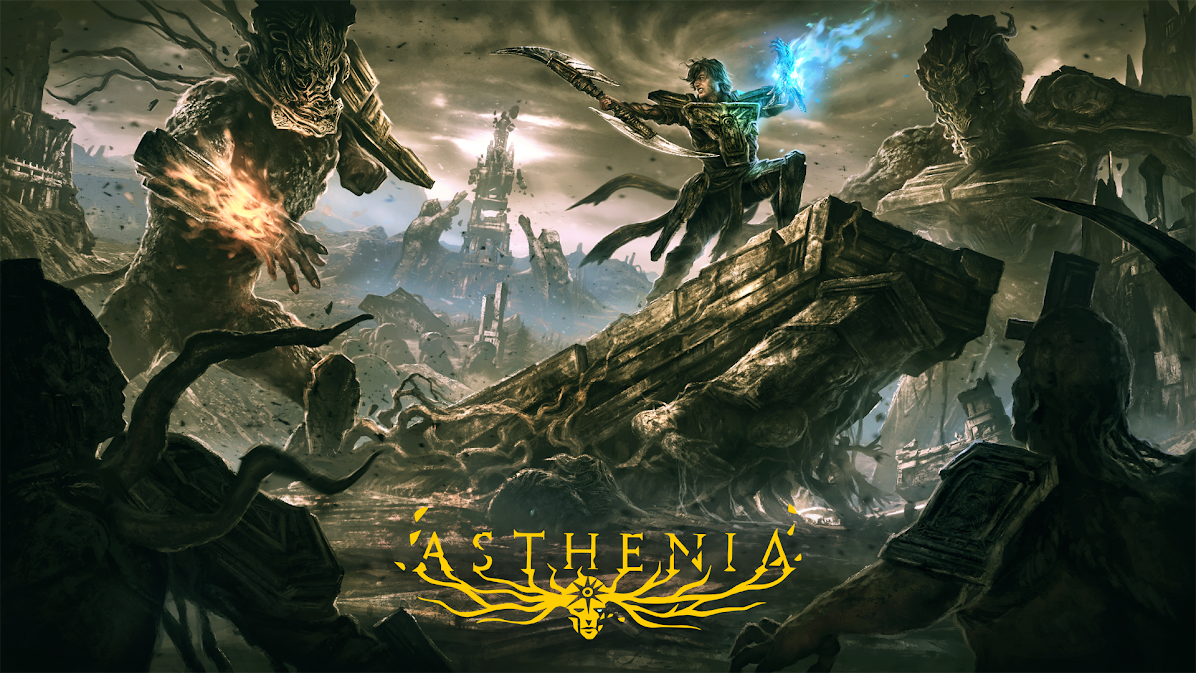
A haunting new dark fantasy experience is on the horizon. Asthenia, an atmospheric adventure currently in development for PC, invites players into a decaying dimension ruled by ancient gods, endless war, and a creeping corruption that devours everything it touches.
Set in a bleak otherworld shaped by grief, faith, and irreversible choices, Asthenia blends oppressive exploration, deliberate combat, and lore-rich storytelling into a deeply personal journey through loss and transformation.
A World Consumed by Corruption and Ancient War
In Asthenia, players step into the role of Adam, an ordinary man torn from his reality and cast into a dying realm alongside other lost humans. This broken dimension is plagued by a mysterious disease that rots flesh, faith, and memory alike, leaving behind abandoned towns, crumbling industrial complexes, and forgotten temples swallowed by time.
Survival is never guaranteed. Resources are scarce, enemies are relentless, and every path forward carries consequence. As Adam searches for answers—and a way back to the person he loves—players must decide what they are willing to sacrifice in a world that offers no mercy.
Deliberate Combat Powered by the Ancient Gauntlet
Combat in Asthenia is grounded, tense, and intentional. Rather than fast-paced power fantasy, the game focuses on close-range encounters that demand patience and precision.
At the heart of this system is the Ancient Gauntlet, a primordial relic that serves as both weapon and tool. The gauntlet allows Adam to fight corrupted enemies and interact with the environment, but its power is limited by scarce energy resources—forcing players to weigh every action carefully.
No Maps, No Markers, No Mercy
One of Asthenia’s defining features is its non-handholding design philosophy. There are no mini-maps, no quest markers, and no clear instructions pointing the way forward.
Progress relies entirely on player observation, memory, and intuition. Environmental clues, level layout, and subtle visual cues guide discovery, rewarding those willing to explore thoughtfully rather than rush ahead.
Environmental Storytelling and Psychological Horror
The narrative of Asthenia unfolds organically through its world. Storytelling is delivered through fragmented letters, unsettling sound design, symbolic imagery, and Adam’s own reflective narration.
Drawing inspiration from genre-defining titles such as Resident Evil 7, Silent Hill, Outlast, and Dark Souls, the game weaves psychological horror with rich worldbuilding. The result is a slow-burning experience where atmosphere and implication carry as much weight as direct storytelling.
Meaningful Choices and Multiple Endings
Player choice plays a central role in shaping the outcome of Asthenia. Decisions made throughout the journey influence the world, Adam’s fate, and the story’s conclusion.
The game features split paths and three distinct endings, all determined by player actions. No choice is insignificant, and consequences often reveal themselves long after decisions are made.
A Personal Vision Brought to Life
Asthenia is the work of solo developer Manthos Lappas, whose personal experiences helped shape the game’s themes and tone.
According to the developer, the goal was to create a world that feels oppressive yet alive—one where discovery must be earned, and where every interaction carries real emotional weight.
Key Features of Asthenia
- A dark fantasy world ravaged by disease, ancient war, and forgotten civilizations
- Close-range combat and environmental interaction using the Ancient Gauntlet
- No maps or quest markers, encouraging organic exploration
- Meaningful player choices with multiple endings
- Lore-rich storytelling delivered through atmosphere, sound, and symbolism
Asthenia Release and Availability
Asthenia is currently in development for PC via Steam.
A playable demo is coming soon, and players can wishlist the game now to follow future updates and announcements as development continues.