
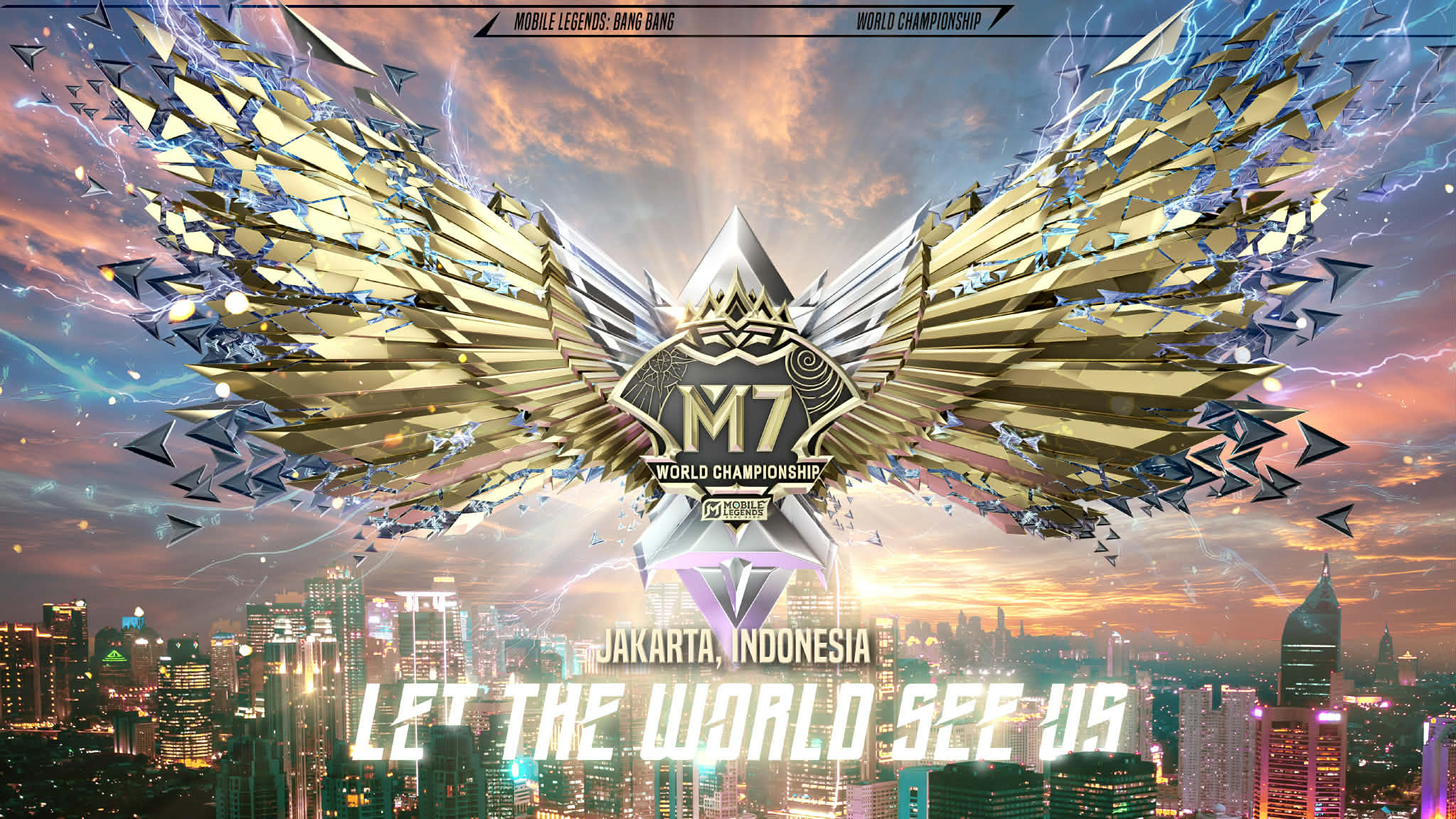
The most consequential story around the M7 World Championship isn’t a dramatic reverse sweep. It’s a business transformation. Mobile Legends: Bang Bang (MLBB) has spent the past few years reengineering itself from a competitive title that had to prove it belonged, into a brand ecosystem that global companies can plug into for culture, community, and measurable commercial outcomes.
The result: non-endemic giants like Visa and the National Basketball Association (NBA) now sit alongside the game’s endemic stalwarts, signaling a new era in mobile esports partnerships.
The turning point wasn’t a single event; it was a strategic repositioning. MLBB stopped pitching a property and started building a platform.
“The biggest driver is the combined strength of MLBB as a game and MLBB Esports as a global competitive platform in connecting brands with a young, digital-first audience,” said Adrian Cher, Global Head of Partnerships, MLBB Esports at MOONTON Games.
He added, “MLBB is no longer viewed simply as a game or a niche esports property, but as a mainstream gaming and esports ecosystem that is embedded in youth culture.”
That cultural relevance was engineered on purpose. MLBB’s crossovers with global franchises helped it leap from gaming into broader entertainment and lifestyle.
“Collaborations with global franchises such as Star Wars, Transformers, and Kung Fu Panda position MLBB squarely within popular culture. For non-endemic brands, these crossovers signal that MLBB is where young audiences already spend their time engaged, social, and emotionally invested,” said Cher.
For marketers, it meant MLBB was no longer just a tournament broadcast but a persistent cultural channel, one capable of delivering relevance as well as reach.
Scale created consistency; consistency created confidence. “Just one year after the game’s launch in 2016, MLBB had already established its esports circuit. Today, the ecosystem spans nearly 20 local leagues worldwide, features over 300 professional teams, and has hosted more than 1,500 tournaments globally,” said Cher.
In practical terms, that gave MLBB the calendar, content pipeline, and community touchpoints required to support year-round partnership strategies—an evolution from one-off signage to always-on brand programs.
Performance made the case unambiguous. “We’ve shown that our esports partnerships can deliver consistent and measurable outcomes,” Cher added. “A recent campaign with Fairrie is a strong example. The luxury brand made its debut at the M6 World Championship (M6) and recorded a 6% conversion rate, three times the industry benchmark. Results like this demonstrate how MLBB delivers commercial impact for any partner, whether they are emerging brands or established global names.”
This is the context in which first-time partners stepped in at M7.
“For the M7, we’re excited to have global giants like the National Basketball Association (NBA), Visa, Red Bull, and realme onboard. Their involvement shows the confidence these brands have in what we do, our reach, engagement, and ability to deliver real outcomes. Combine that with our cultural relevance and a young, highly engaged audience, and it’s clear why more traditional and non-endemic brands are choosing to invest in MLBB Esports,” said Cher.
For Visa, the partnership aligns brand strategy with a generational opportunity.
“Visa has long recognized passion pillars key to unlocking opportunities across diverse audiences, particularly with ‘next-gen’ consumers or those who are in the millennial and Gen Z demographic groups,” said Nico Leviste, Visa Philippines Head of Marketing. He pointed to the Philippines’ tech-forward, mobile-first profile and the scale of the gaming audience. “It made strategic sense to tap into gaming – an emergent passion pillar that cuts across income classes, age groups, genders, and geographies.”
The intent goes beyond a single tournament moment. “We are also proud to support the development of esports talent locally and across the region through the promotion of one of the biggest esports stages in the world. This is an exciting space for us, and beyond M7, we look forward to unlocking opportunities with various partners through gaming.” added Leviste.
If the product was once proving legitimacy, the proposition now is strategic fit. “When we talk about why brands like Visa and the NBA are investing in the M Series, it starts with the sheer scale of MLBB esports and the audience it reaches globally,” said Cher. “From an esports perspective, MLBB ranked third on Esports Charts’ list of the most popular esports titles in 2025—even without the M7 included in the numbers. That level of viewership translates into unmatched visibility for brands on a global stage, turning each tournament into a high-impact platform for exposure.”
Another key factor is the brand’s values alignment with MLBB.
“For Visa, the focus is on empowering youth through digital inclusion—MLBB Esports naturally attracts young, digitally active audiences. For the NBA, it’s the shared DNA of competitive spirit and fan-driven culture that makes both ecosystems resonate. What’s really exciting is that with the M Series, we do more than just put brands in front of that audience. We create 360-degree experiences that actually engage them, give them value, and connect them to the brand in meaningful ways through broadcast, social media, and community engagements and activations, among others.” explained Cher.
The M7 Carnival turns that philosophy into a case study. The upcoming fan experience delivers not just gaming zones but a celebration of music and culture.
“Opportunities like these show how our partners have the platform to go beyond traditional sponsorship and create experiences that truly engage fans. By bringing their brand into the heart of the event, they’re connecting with the audience in ways that is authentic, memorable, and exciting. And that’s exactly the kind of engagement that turns visibility into real impact.” said Cher.
This is the essence of MLBB’s modern partnership model: the tournament becomes a catalyst for lifestyle, creator, and community touchpoints that extend before, during, and beyond the broadcast window.
Crucially, the evolution also addressed long-held misconceptions. “One misconception we often hear is that esports audiences are niche or hard to reach. In reality, MLBB connects with a massive, global audience—110 million monthly active users and over 1.5 billion installations,” Cher said.
The other shift is how brands now view the quality of that attention. “Brands are recognising that esports fans are highly interactive—they watch, share, discuss, and participate across multiple platforms. This makes them an incredibly responsive and connected audience.”
With MLBB’s digital-first activations, measurement becomes a feature, not an afterthought. “Because so much of what we do is digital, measuring impact is straightforward… Through the social, marketing, media, and data insights that we provide, we’re able to help them understand the results and improve on the next campaign with us.”
For MLBB, the upshot is bigger than a sponsor slate. “The entry of brands like Visa and the NBA has unlocked entirely new ways to engage audiences and shape culture,” said Cher. “At the M7 Carnival, for example, fans will get to enjoy creator-led activities, gaming zones, and live performances from artists like Stephanie Poetri. Moments like that show how MLBB isn’t just about esports and gaming. This positions esports as more than just a competitive space—it becomes a platform where entertainment, community, and lifestyle intersect.”
The presence of established institutions raises the bar for professionalism, scale, and innovation, creating a flywheel that attracts more partners and enables more ambitious formats—a rising tide for the ecosystem.
In the end, the story beyond M7 is a blueprint: culture-led brand relevance, year-round scale, data-backed performance, and experiences that give partners a role in the fan journey.
Or, as Cher distilled it, “Rather than isolated brand placements, partners are able to create immersive experiences that connect with fans before, during, and beyond the tournament—from interactive zones and creator-led activities to lifestyle and cultural touchpoints. This demonstrates how the M Series functions as a platform, not just an event, and why it has become a viable, long-term investment for traditional sectors entering esports.”

Pingback: Philippine Media Leads the Way at M7 Awards - ALL-STAR